Chinese Golden Dragon Embroidery Design
A Designer’s First Look: Bold, Traditional, and Ready for Real Projects
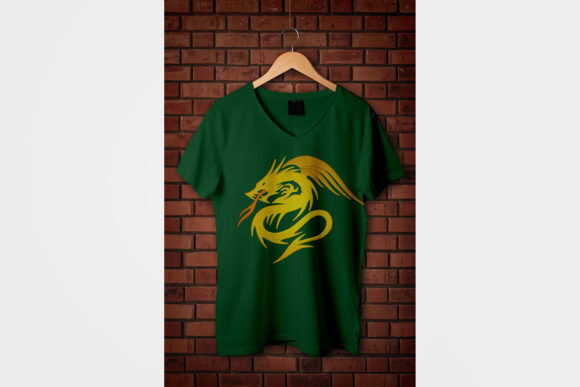
When I opened the Chinese Golden Dragon embroidery file, my first thought wasn’t “pretty”—it was “present.” This isn’t a timid motif. It’s a coiled, upward-gazing dragon with strong curves, layered scales, and a sense of motion that reads clearly even at small sizes. Digitized by hand—as advertised—it avoids the flat, mechanical look some auto-digitized dragons fall into. The layout feels intentional: balanced width-to-height ratio, no awkward tail truncation, and enough breathing room around the outer edges to avoid hooping stress. It lands squarely in the Around The World category not just thematically, but in how it carries cultural weight without leaning on cliché.
How It Actually Stitches: From File to Finished Product
I tested Chinese Golden Dragon on three real-world items: a medium-weight cotton tote bag, a 100% cotton sweatshirt (medium gray), and a linen-blend pillow cover. On all three, it held up—no thread breaks, no puckering, no lost detail—even without heavy stabilizer layers. That tells me the stitch density is well-judged: dense enough for rich texture in the head and claws, but open enough in the body’s flowing curves to prevent stiffness. The satin stitch along the spine gives dimension, while subtle fill-stitch variations in the scales add depth without overloading the fabric.
This design shines brightest where presence matters: on a boutique sweatshirt front, a personalized baby blanket corner, or an embroidered patch sewn onto a denim apron. I’ve used it as a focal point on a holiday tea towel—customers commented on how “alive” it felt, not just decorative. For Etsy sellers, that’s gold: it transforms a simple handmade product into a story-driven personalized gift. It also works beautifully in printable mockups—clean lines, clear contrast, and strong silhouette make it easy to visualize across colorways and product types.
Where to Use It—and Where to Pause
Chinese Golden Dragon is versatile, but not universal. It’s ideal for custom apparel, embroidered patches, pillow covers, and nursery decor—but tread carefully on stretchy fabrics like knits unless you’re using cutaway stabilizer and reducing tension. Thin fabrics (like lightweight voile or baby onesies) need extra backing support; the dragon’s scale detail can sink or blur if the base fabric gives too much. On dark fabric, stick with high-contrast thread—gold metallic or cream over black reads powerfully, but pale yellow may disappear.
Caps and curved surfaces? Possible—but only at the largest available size. Smaller versions lose clarity in the eye and claw details when wrapped around a crown. Tiny corners (like on pocket flaps or baby bibs) aren’t the best fit either—the design needs space to breathe. And while it’s lovely on holiday gifts or wedding keepsakes (think dragon-and-phoenix pairings), avoid pairing it with overly busy backgrounds—it’s a statement piece, not an accent.
What It Adds to Your Craft Business
For small shop owners and creative entrepreneurs, Chinese Golden Dragon elevates perceived value instantly. A plain cotton tote becomes boutique-worthy. A basic sweatshirt gains cultural resonance and visual authority. Customers recognize craftsmanship—not just because it’s embroidered, but because the design *feels* considered: balanced, detailed, and respectful of tradition. That builds trust. When buyers see this on your Etsy listing or craft fair table, they don’t just see a dragon—they see intention, skill, and care.
It also supports brand consistency. Whether you’re building a line of globally inspired home goods or launching a collection of meaningful baby embroidery, Chinese Golden Dragon fits seamlessly—no rebranding needed. And because it’s offered in six sizes, you can scale it across products: large for a wall hanging, mid-size for a pillow, compact for a cap or patch—all while keeping proportions intact.
Practical Designer Notes Before You Stitch
- Always test first: Run a sample on scrap fabric matching your final project’s weight and stretch.
- Check thread color contrast: Metallic gold reads rich on light fabric; matte gold or ecru works better on darks.
- Review stitch density visually: Zoom in on the file preview—look for tight clusters near the eyes and claws where thread buildup could cause stiffness.
- Confirm hoop size compatibility: The largest version likely needs a 5x7" hoop minimum; verify before committing to a garment layout.
- Inspect small details: Are the whiskers distinct? Does the eye hold shape? If not, adjust underlay or reduce speed.
- Test black-and-white mockups: Helps spot contrast issues before stitching begins.
- Use proper stabilizer: Tear-away for stable wovens, cutaway for knits or delicate fabrics.
- Verify licensing: Since this is a digital embroidery file intended for commercial use, confirm whether resale of finished items or redistribution of the file is permitted.
Final Thought: A Design That Earns Its Place
Chinese Golden Dragon doesn’t shout. It commands—quietly, confidently, and with craft. It’s the kind of machine embroidery design that makes clients pause mid-scroll, makes craft fair shoppers reach for their wallets, and makes fellow designers nod in quiet recognition. It’s not just another Embroidery file—it’s a reliable, culturally grounded design asset. Whether you’re stitching a one-off personalized gift or scaling production for your small shop, this dragon earns its gold.